
Soon after the Delhi police recovered an improvised explosive device from the city's Ghazipur flower market on Friday, the special cell said that the suspects had done a detailed recce of the spot where the explosive was recovered.

This is the case even though the benchmark index is only 5 per cent below its all-time high. The list of stocks trading at a discount primarily consists companies in the automotive, banking, oil and gas, insurance, healthcare, and metal sectors.

Lower income groups earning less than Rs 100,000 a year are yet to recover as are those earning between Rs 100,000 and Rs 200,000.

Fundraising via initial public offers (IPOs) dropped 52.2 per cent to $147.2 billion in the first eight months of calendar year 2023 (CY23), suggests a recent report by GlobalData, a London-based analytics and consulting company. At the country level, the report suggests, India topped the charts with 152 transactions worth $3.8 billion during this period, primarily due to a higher number of SME IPOs, followed by the US with 99 deals totaling $16 billion, while China ranked third with 88 transactions worth $32.3 billion. "An analysis of GlobalData's Deals Database reveals that there were 750 IPO listings registered with an aggregate deal value of $147.2 billion in the first eight months of 2023 on the stock exchanges worldwide.

A prolonged break in monsoon rains in most parts of the country is threatening to hit the yield of kharif crops. It could even delay the upcoming rabi sowing. Major agricultural states, such as Maharashtra, Madhya Pradesh, Andhra Pradesh, Punjab, and Gujarat, have witnessed a deficit of 30-80 per cent in southwest monsoon rainfall in August compared to the long-period average for the month. Meteorologists see no big revival in monsoon rains from hereon, though they forecast "some activity" over the Bay of Bengal on September 5-6.

With India's market capitalisation surpassing the $3-trillion mark, stocks across the board are adding heft. The upper limit for qualifying as a mid-cap stock -under the Securities and Exchange Board of India's (Sebi's) definition for mutual fund reclassification - has hit an all-time high of $5.4 billion. In 2013, amid the taper tantrum sell-off, it had dropped to just $1 billion, shows an analysis done by ICICI Securities.

A strong appetite for gold on Friday's Dhanteras is expected this year due to auspicious reasons and geopolitical concerns, continuing the 2022 trend driven by pent-up COVID demand. Compared to last year's Dhanteras, gold prices have jumped 22 per cent and silver prices by 21 per cent, respectively. "Gold and silver are good for portfolio diversification, especially in times of geopolitical turbulence.

rediffGURU Ramalingam Kalirajan answers your personal finance queries.
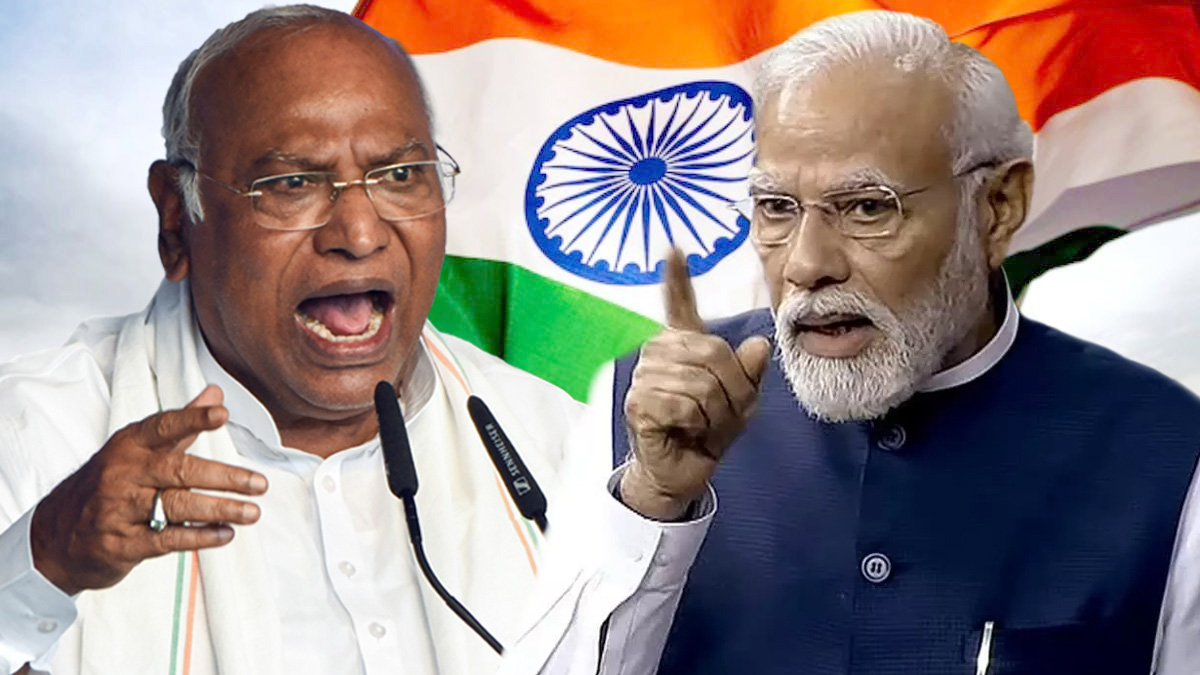
'In India, political parties want to portray their leaders as cinematic heroes critical of their opponents.' 'This is where memes come into play.'

Describing the DAD as the "guardian of defence finance", he emphasised the need to bolster the internal vigilance mechanism so that any suspicious activity can be detected and reviewed immediately.
India's exports are becoming less vulnerable to changes in world demand and exchange rates, according to a publication titled 'Re-examining Narratives: A Collection of Essays', penned by chief economic advisor (CEA) V Anantha Nageswaran and his team. The publication pointed out that this conclusion has been drawn from the fact that there has been a decrease in the income elasticity of exports to 3.44 during 2009-2022, from 5.67 during 1991-2008, and in the inverse price elasticity of exports to 0.4 from 2.7. While a decline in elasticities is favourable in the presence of downside risks such as a decline in global demand and an appreciation of exchange rates, it may not be beneficial during boom periods.

Patience can be rewarding. 'Post-listing, sanity often returns to valuations of newly-listed businesses within six to nine months. Buy then.'

Which entrepreneur would willingly part with her or his hard-earned money for grasping, self-serving politicians? asks Debashis Basu.

Profits of India's top listed companies have been growing at a faster pace than those of their American peers, but when it comes to revenue growth, the order has reversed recently. The combined net profit of the S&P 500 companies was up 14.1 per cent year-on-year (Y-o-Y) during the trailing 12 months (TTM) ended December 2023, as against 17.4 per cent profit growth logged by the BSE 500 companies in the same period. This is the second consecutive year of faster profit growth for the BSE 500 companies.
The group began to outperform the broader market only with the onset of the pandemic in March 2020 while earlier it was largely keeping pace with the Sensex. The group's market cap is up 164.4 per cent since the end of March 2020 against a 105 per cent rally in the Sensex.

Domestic investors are tightening their grip on the ownership of listed companies. The gap between the shareholding of domestic institutional investors (DIIs) and foreign portfolio investors (FPIs) narrowed to 13.11 percentage points at the end of the September 2023 quarter. At the peak, the gap was nearly 50 percentage points in March 2015, according to an analysis by Prime Database, a leading provider of data on the capital market.

A new analysis of genetic samples collected from a seafood market in central China's Wuhan city shows the presence of the SARS-CoV-2 virus in raccoon dogs sold at the venue, strengthening the case for the natural origin of the Covid-19 pandemic, according to a team of international experts.

The quality of employment has deteriorated in 12 of the 21 major states and Union Territories, as the proportion of workers in regular or salaried jobs declined between July 2022 and June 2023 compared to the previous year, according to a Business Standard analysis of the latest Periodic Labour Force Survey (PLFS) released by the National Statistical Office. Assam experienced the most significant decline in the share of workers in salaried work, dropping by 8.7 percentage points to 10.8 per cent in the July 2002-June 2023 period from 19.5 per cent in the July 2021-June 2022 period. This was followed by Delhi (6.2 percentage points), Uttarakhand (5.2 percentage points), and Chhattisgarh (1.6 percentage points).
'Commentators have said that dealing with allies as equals will make Modi more sensitive.' 'Remember that the people Modi is dealing with are equally autocratic in their own lairs.' 'Further, Modi always has handy the threat of dissolving Parliament and calling for fresh polls.' 'Most of his own party, and certainly his allies and opponents having blown their budgets of efforts and resources in the just concluded elections, have no stomach for this.' 'They are all greatly looking forward to the loaves and fishes of office on offer.' 'That gives Modi an unbeatable advantage in any push-comes-to-shove situation,' explains Shreekant Sambrani.

After a spike in crude oil and gas prices in October following the Hamas terror attack, prices eased down 9 per cent month-on-month in November. The Organization of the Petroleum Exporting Countries (Opec) and Opec+ agreed to a further voluntary production cut in January-March 2024 to try and support global crude prices. The best guess here is that crude prices (currently at $75/barrel, or bbl) will not likely cross significantly above $80, and gas prices are also likely to remain subdued unless there's a further escalation in the Israel-Hamas conflict.

Statements of five 'Angadiya' firm operators have also been recorded by the ED to establish the "money trail" of this alleged Rs 45 crore bribe amount.

For the startup ecosystem in India, the scorecard so far has been a mixed bag, observes Akhil Gupta.

The recent rally in small and midcap (SMID) stocks is not backed by fundamentals and is a case of irrational exuberance, analysts at Kotak Institutional Equities said in a recent report. The fundamentals of most of these companies have, in fact, worsened over the last few months, they noted. Yet, some analysts expect the bull run in these stocks to continue amid intermittent corrections.

The state is also the biggest market for TVS, another incumbent player, and together with Bajaj Auto, they accounted for 88 per cent of Maharashtra's total electric scooter sales last month. As many as 8,417 units were sold in Maharashtra in September. Bajaj Auto's contribution was 4,048 vehicles and that of TVS was 3,389, according to model- and state-wise data from the Society of Indian Automobile Manufacturers (Siam).

The income tax department has notified rules for valuation of equity and compulsorily convertible preferable shares issued by startups to resident and non-resident investors. As per the changes in Rule 11UA of I-T rules, which comes into effect from September 25, the Central Board of Direct Taxes (CBDT) provides that the valuation of compulsorily convertible preference shares (CCPS) can also be based on the fair market value of unquoted equity shares. The amended rules also retain the five new valuation methods proposed in the draft rules for consideration received from the non-residents viz., (i) Comparable Company Multiple Method, (ii) Probability Weighted Expected Return Method, (iii) Option Pricing Method, (iv) Milestone Analysis Method, and (v) Replacement Cost Method.

The Interim Budget for 2024-25 (FY25) to be presented on February 1 is likely to assume 10-10.5 per cent nominal gross domestic product (GDP) growth against 8.9 per cent estimated for FY24 by the National Statistical Office (NSO). "We were waiting for the First Advance Estimates GDP numbers for FY24. "We will finalise the nominal GDP growth assumption for FY25 Interim Budget in a couple of days.

Stake sales by promoters and private equity/venture capital (PE/VC) investors this year are already exceeding twice those of last year. So far this calendar year, the selling stands at over Rs 87,400 crore, 2.2 times the Rs 39,700 crore worth of shares sold by promoters and PE/VCs in 2022. This year's tally has received a boost from stake sales by Adani group promoters.

'We suggest an equity strategy of 5% to 10% exposure to cash, 5% to Gold ETF, close to 50% to Sensex/Nifty/large mid-cap stocks.'

Base metals major Hindalco's overseas subsidiary, Novelis, has submitted a draft registration with the US Securities and Exchange Commission (SEC) for the proposed public offering of promoters' shares. Novelis' sole shareholder, AV Minerals (Netherlands) NV, is a 100 per cent subsidiary of Hindalco. Novelis would not receive any proceeds from the sale. Assuming SEC clearance could go through in about 6 months.

Last week, the Delhi high court ruled that the mere use of trademarks on Google Ads, an online advertising platform, did not amount to infringement under the Trade Marks Act, 1999. This was after online travel agency MakeMyTrip (MMT) claimed that its trademarks, "Makemytrip" and "MMT", were being used as keywords in Google Ads to display ads and links of its rival Booking.com. The order has opened up a new debate on trademark infringement in the digital realm, revolving around whether it can create confusion among users.

The net leasing of Grade-A commercial office space in India will stagnate this financial year at 32-34 million square feet, with global uncertainties brewing caution among key tenant categories, according to the latest Crisil Ratings report. Major seven cities in India - Bengaluru, Chennai, Hyderabad, Kolkata, Mumbai Metropolitan Region (MMR), National Capital Region (NCR) and Pune - had Grade-A office space with an operational stock of around 705 million square feet as of March 2023. India's commercial office space is dominated by technology companies, with information technology (IT) and IT-enabled services (ITeS) companies occupying 42-45 per cent of the operational stock.

India's top technology companies will witness a tepid revenue expansion in the third quarter (October - December) of the current financial year (Q3FY24) - along expected lines - on the back of furloughs and no blockbuster deals, even as the momentum gained from Generative AI (GenAI) is likely to take centre stage. IT services and consulting firm Accenture's first quarter numbers in FY24 showed a significant pick up in GenAI spending. It signed new bookings to the tune of $450 million in this space, a surge from the $300 million signed in the whole of FY23.

This is the fastest the markets have taken to get out of bottom, compared to previous crises.

Corporate margins and profits in India remain vulnerable to changes in crude oil prices in the international market. Historical quarterly data from listed companies (excluding banks, finance and insurance, oil and gas, and power sectors) indicate an adverse correlation between corporate margins and crude oil prices.

If you work for 30 years, a two per cent difference in pension returns can reduce your final retirement nest egg by 40 per cent. The Rs 9-trillion National Pension System (NPS) seems to be delivering incrementally higher returns than the twice-as-large Employees' Provident Fund Organisation (EPFO), shows a Business Standard analysis of data over the last seven years for the two retirement fund bodies. An investor who put in Rs 100 in retirement savings seven years ago would have seen her NPS nest egg grow to Rs 182 by 2023, according to the analysis based on the Pension Fund Regulatory and Development Authority's recently released Handbook of National Pension System Statistics 2023.

Six decades and more later, we are now captives of our identities. Every poll is based on elaborate calculations of electability of candidates on the basis of their castes and other narrow definers. That, along with voter promiscuity, is what defines our political culture, which remains stubbornly resistant to any change, asserts Shreekant Sambrani.

'When I was toying with 10 different ideas, my father was diagnosed with lung fibrosis and his condition deteriorated so badly that we lost him in six months. He was very unsatisfied with the lack of proper diagnosis.' 'It made me think will anyone do a biopsy if there is no symptom? Why is it that we do not have any non-invasive diagnostic method?' 'This idea was the strongest out of the ten, and with Snahlata Singh with her cancer biology background joining me, the idea got a real boost.'

At the outset, decide whether you want to be a trader or an investor, suggest Sarbajeet K Sen and Sanjay Kumar Singh.

Boom, bust or a bit of both: as the jury bides time before ruling on the US 'recession', the economy's vital signs at a perplexing time of high-interest rates, still-punishing inflation, and surprisingly strong economic gains are a study of a growing debate over whether the world's largest economy is barrelling into a new downturn. With the US Federal Reserve's (Fed's) inflation fighters attempting the risky pursuit of 'pillow-soft landings' and its economy sending out mixed signals, if there is indeed a recession, it could spell trouble for domestic equities and corporate earnings growth.

Banks are likely to see their net interest margins (NIM) - broadly the difference between interest earned on loans and paid on deposits - shrink by another 30 basis points (bps) over the next few quarters. After hitting a peak of 3.3 per cent in the third quarter (Q3) of the financial year ended March 31, 2023 (FY23), NIMs have been on a downward trajectory, touching 3.13 per cent in Q2FY24 on higher cost of funds, according to capital markets firm CARE Ratings. Banks are still grappling with the Reserve Bank of India's policy rate increases - that have made deposits costlier as the interest payable to customers has increased - and the regulatory actions on unsecured lending.
 © 2026 Rediff.com - Advertise with us - Disclaimer - Privacy Policy - Sitemap - Feedback - About us - Terms of use - Grievances